About Klukwan
Klukwan is a small, ancient, Alaska Native village positioned on the banks of the Chilkat River in Southeast Alaska. Klukwan is located twenty-two miles north of Haines, Alaska and is on the Haines Highway with connections to Haines, Haines Junction, Anchorage, Fairbanks, Canada, and the Continental United States.
The name Klukwan is taken from the Tlingit phrase "Tlakw Aan" which literally means "Eternal Village." Local oral history tells us that Klukwan was originally settled many years ago by a group of Gaanaxteidi (Raven Clan) men and their Kaagwaantaan (Eagle Clan) wives. The Village site was chosen because of the rich natural environment found here.
Demographics
As of the census of 2020, there were 87 people, 65 households, and 29 families residing in the CDP.
The median income for a household in the CDP was $37,917, and the median income for a family was $66,250.
Location
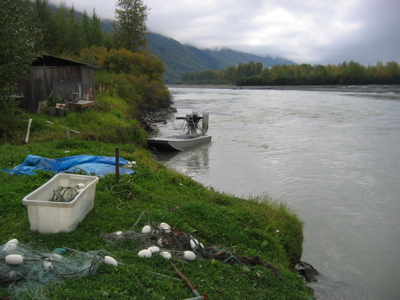
Klukwan is a small, ancient, Alaska Native village positioned on the banks of the Chilkat River in Southeast Alaska. Klukwan is located twenty-two miles north of Haines, Alaska and is on the Haines Highway with connections to Haines, Haines Junction, Anchorage, Fairbanks, Canada, and the Continental United States.
According to the United States Census Bureau, the CDP has a total area of 4.9 km2 (1.9 mi2). 3.2 km2 (1.2 mi2) of it is land and 1.7 km2 (0.6 mi2) of it (34.21%) is water.
Information from Answers.com
Klukwan is located adjacent to the Alaska Bald Eagle Preserve.
Klukwan is located at 59°24″0 N, 135°53″36 W (59.400098, -135.893393)
Klukwan is located 35 km (22 miles) northwest of Haines, on the Chilkat River near the Haines Highway.
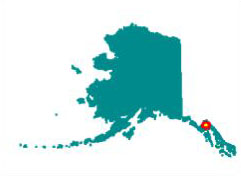
Click the map to zoom into Klukwan using Google Maps
Attractions
The Whale House
Klukwan is the home of the world famous Whale House. The Rain wall screen and four house posts: the Black Skin Post, the Sea Monster Post, the Worm Girl Post, and the Raven Post are all part of this famous, and much sought after collection. One can hardly pick up a book on Tlingits or Northwest Coast Art without seeing the following photo of the Whale House collection taken by Winter and Pond in 1895.
Chilkat Weavers and Weavings
Chilkat Weavings have long been an integral part of Klukwan’s legacy. Although the art of Chilkat Weaving did not originate in Klukwan many of the finest examples of Chilkat Weaving were made here. The art of North West Coast Style Woolen Weaving–both Chilkat and Ravenstail–has been experiencing a renaissance in Klukwan beginning with the creation of the Klukwan Healing Robe. Currently there are several weavers in Klukwan who are carrying forth the legacy of woolen weaving. (See list of artists in Artist Gallery). When the Jilkaat Kwaan Cultural Heritage Center Building is completed there are a number of Chilkat Weavings that will be placed on display there. Some weavings have been recently returned to Klukwan via the Native American Graves Protection and Repatriation Act, and some have been maintained in Klukwan by clans and family members.
Chilkat Bald Eagle Preserve
Every fall thousands of Bald Eagles congregate in the Chilkat Valley to feed on a late run of Chum Salmon. Viewing is superb on a three-mile stretch of the Haines Highway that parallels the Chilkat River. Eagles can be seen feeding on the river flats and perched by the dozens on the tall Black Cottonwood trees that line the riverbank. The scenery is beautiful, and the environment is pristine – an awesome setting for an unforgettable experience.


History
The people of Klukwan lived self-sufficient and prosperous lives prior to the arrival of outsiders brought in by the Alaska Gold Rush in the late 1800s. The Chilkats subsisted on foods found in their immediate area and engaged in trade with neighboring and farreaching tribes to the north and the south. The prosperity of the Chilkats continued well after contact as they closely guarded their trade routes into the Interior of Alaska and Canada. Legend tells us that the Chilkats began to lose control of the prosperous trade routes only after the United States Army came armed with Gatling guns. Spears and daggers, the traditional weapons of the Tlingit, were no match for automated weapons.
The early 1900’s brought much change to Klukwan residents. A Bureau of Indian Affairs School and a Presbyterian Church were both constructed in Klukwan during 1902. Fort Seward, a former United States Army base in the nearby town of Haines, was also constructed about that same time. The presence of these institutions had a profound effect on the community of Klukwan. Clan houses, which were multi-family dwellings centered upon Tlingit societal structures, were abandoned for single-family units. Laws against potlatches and other Tlingit customs were passed forcing Tlingits throughout Southeast Alaska to abandon tribal ways.
Extensive tribal land bases all over Alaska were dramatically reduced with the passing of mining claims, homestead laws and the Statehood Act. In Klukwan, the ancestral land base, which covered approximately 2.6 million acres, was reduced to an 898.6-acre reserve as miners, homesteaders, the Territory/State of Alaska and others staked their claims on Chilkat land. [Fortunately, in the 1990s Nature Conservancy who had been entrusted with the land by Klukwan Iron Ore Co. returned 1,000 acres of ancestral lands to the tribe.] In spite of all the above encroachments upon the land and culture of the Chilkats, there still remains a cultural richness that makes Klukwan a unique place to visit and experience.
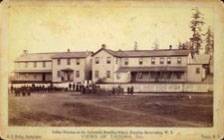
Children were punished for speaking their native languages in schools and were often removed from their homes for years at a time in boarding school situations. Some children were sent as far away as Kansas and were never returned to their families.
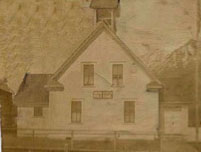
The BIA School
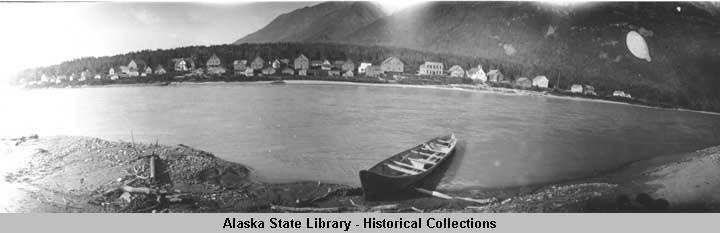
Klukwan, Alaska on the Chilkat River – Alaska State Library, Winter & Pond Photographs, ASL-P87-2909
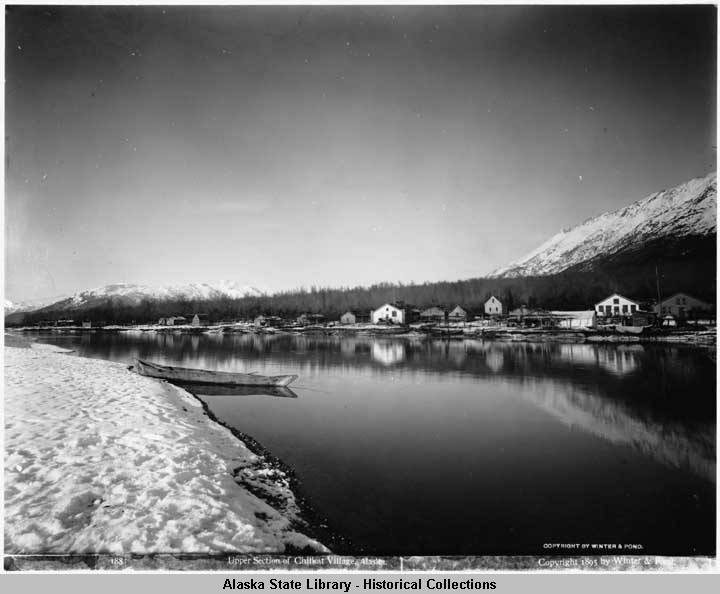
Upper Section of Chilkat Village, c. 1895 – Alaska State Library, Winter & Pond Photographs, ASL-P87-0001
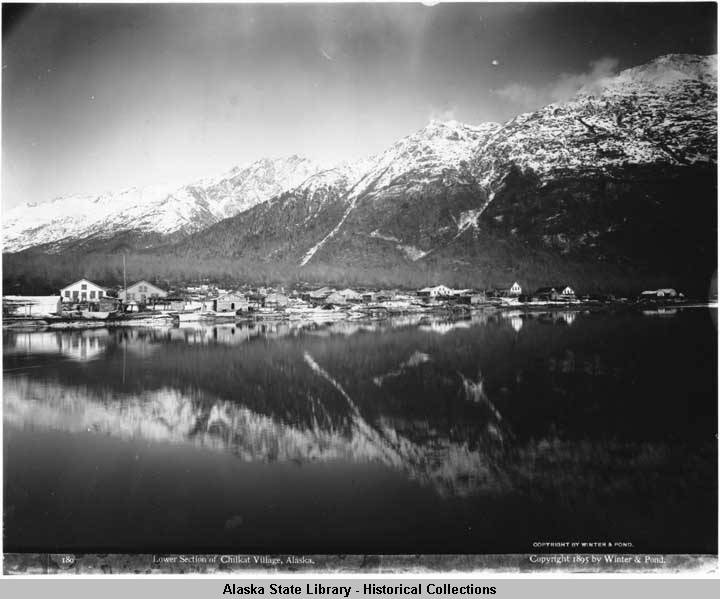
Lower Section of Chilkat Village, c. 1895, Alaska State Library, Winter & Pond Photographs, ASL-P87-0002
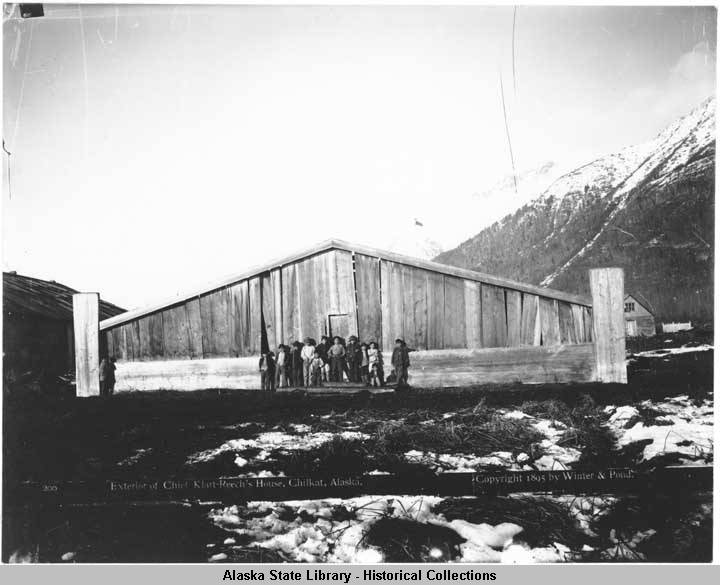
xterior of Chief Klart-Reech’s House, Chilkat, Alaska c.1895, Alaska State Library, Winter & Pond Photographs, ASL-P87-0009
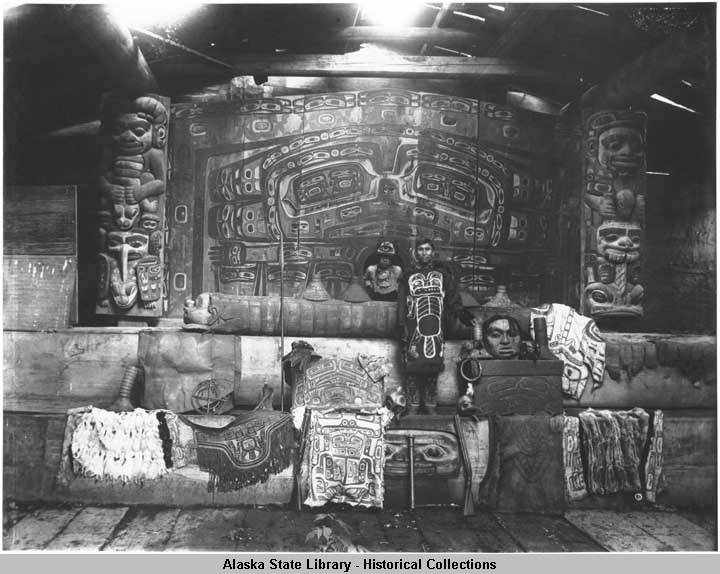
Interior of Whale House of Chief Klart-Reech, Klukwan, Alaska c.1895, Winter & Pond Photographs, ASL-P87-0013
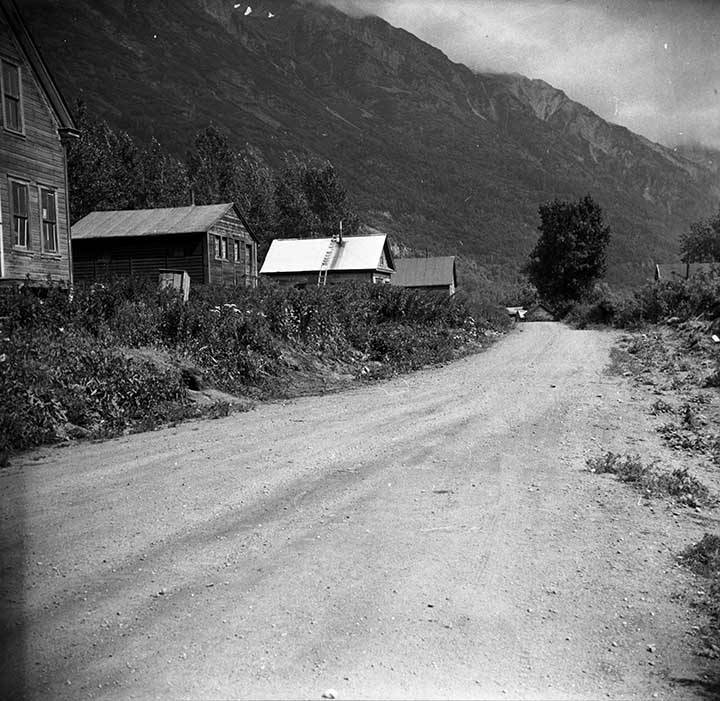
Klukwan, Alaska 1954, Alaska State Library, Evan Hill Photograph Collection, ASL-P343-216

Klukwan from the Dalton Trail 1898-1899, Alaska & Polar Regions Collections, Elmer E. Rasmuson Library, H.C. Barley photographs, UAF-1998-28-83
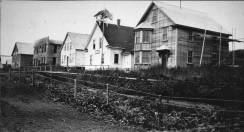
Government school house, Klukwan, Alaska 1913?, Alaska & Polar Regions Collections, Elmer E. Rasmuson Library, Reverend S. Hall Young Album, UAF-2001-38-79

Klukwan 1949?, Alaska & Polar Regions Collections, Elmber E. Rasmuson Library, George A. Morlander Photographs, UAF-1997-108-754