
Overview of Contaminated Sites
Tribal Response Program (TRP)
The Chilkat Indian Village’s Tribal Response Program (TRP) is dedicated to protecting our community by participating in regulatory and scientific dialogue concerning contaminated sites.
According to the U.S. Environmental Protection Agency (EPA), a Brownfield site is defined as real property where the expansion, redevelopment, or reuse of the land is complicated by the presence (or potential presence) of a hazardous substance, pollutant, or contaminant.
TRP operates under the authority of the Constitution for the government of the Chilkat Indian Village, Article V section 1 (l) “to protect the natural environment and resources of the Village”. Under stipulations laid out in the 2002 US Comprehensive Environmental Response, Compensation, and Liability Act (CERCLA) Section 128(a), the Chilkat Indian Village maintains a public record of contaminated sites and provides oversight to cleanup efforts ensuring they are protective. Chilkat Indian Village TRP is committed to protecting traditional subsistence and community use of natural resources from complications due to real or perceived contamination. EPA provides vital grant funding and guidance necessary to empower our program’s growth and self-governance.
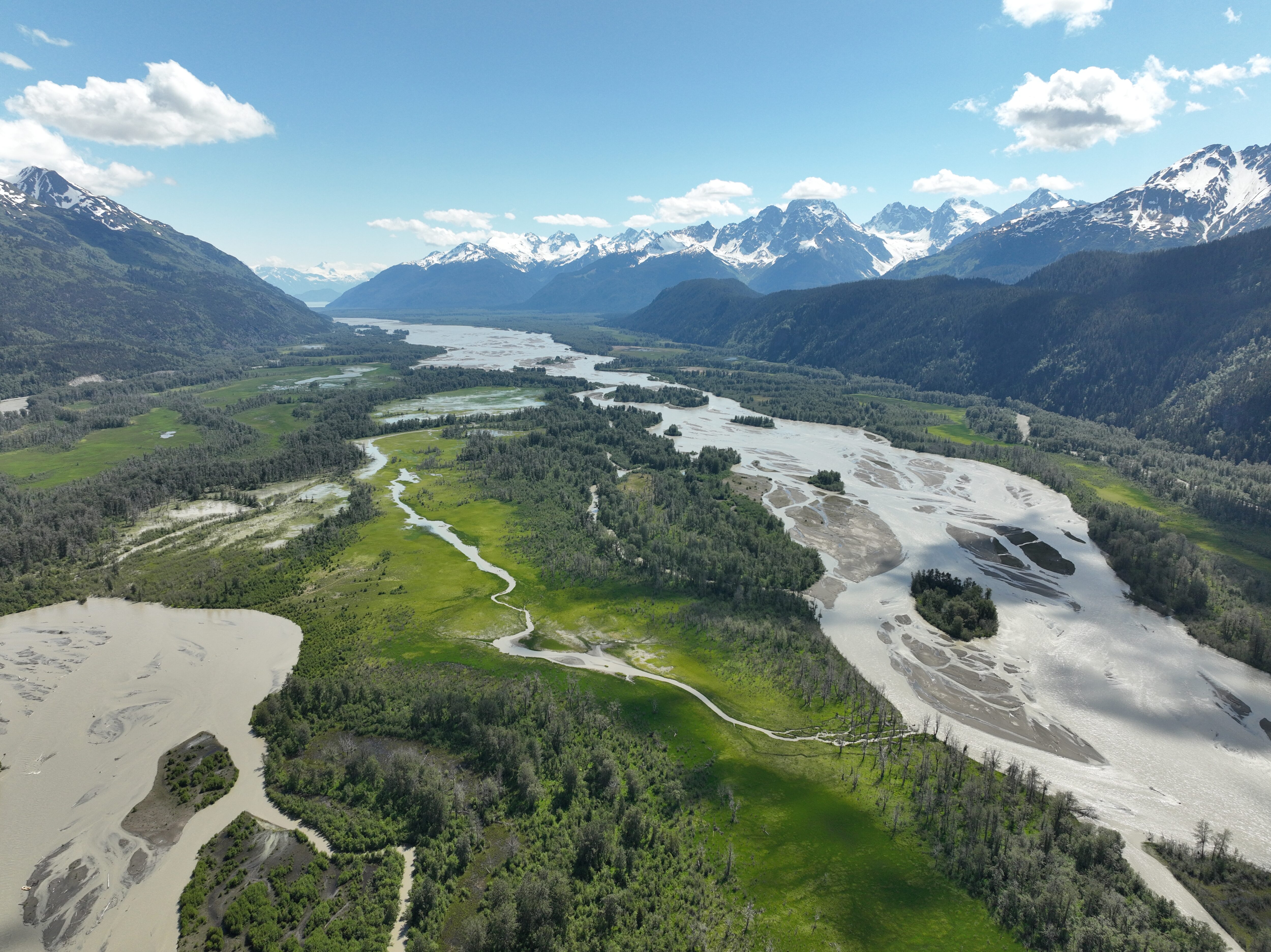 To ensure a comprehensive approach to land restoration, our program is built upon Four Key Elements laid out by EPA in the (CERCLA) Section 128(a), State and Tribal Response Program:
- Inventory and Priority Setting: The Chilkat Indian Village maintains a living document of all known and potential contaminated sites, ranking them based on their risk to public health and the environment.
- Oversight and Enforcement: CIV ensures that all assessments and cleanups are conducted safely and comply with both state and federal environmental standards, to ensure response actions are protective of people and the environment.
- Public Participation: We provide the community with meaningful opportunities to voice concerns, stay informed on the progress of contaminated sites cleanups and provide input.
- Cleanup Approval and Verification: Once a project is finished, we will review and comment on reports submitted through ADEC which characterize or document cleanup of contaminated sites.
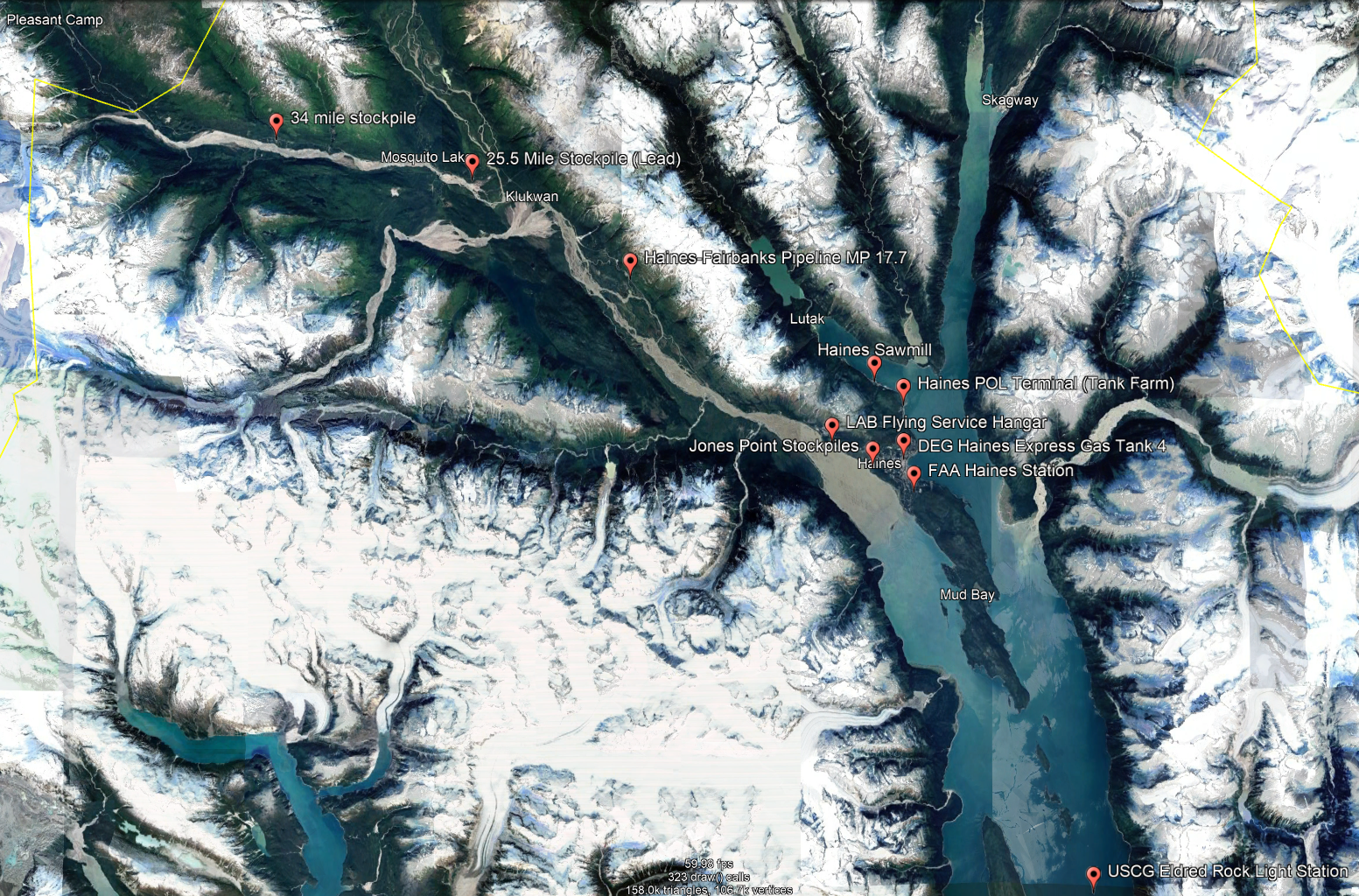
High-priority sites we focus our efforts on:
- 34 Mile soil stockpile (Haines Highway): 1,300 cubic yards of petroleum-contaminated soil were abandoned for over two decades at 34 Mile adjacent to Big Boulder Creek. In 2000 soil from the Haines Sawmill was moved to 34 Mile to be staged prior to recycling of the soil into asphalt for highway construction. Contractors rejected the soil due to high sawdust and woodchip content making it unsuitable for the mix. In 2023 during reconstruction of the Haines Highway, CIV brought this contaminated site to the attention of Alaska Department of Environmental Conservation (ADEC). Instead of reincorporating the now low sawdust/woodchip soil stockpile into asphalt, an ongoing 2025 ADEC workplan involves a landfarm with bi-monthly tilling to accelerate natural breakdown of petroleum byproducts from the Haines Sawmill.
- 25 Mile lead stockpile (Haines Highway): In the Chilkat Bald Eagle Preserve, Alaska Department of Natural Resources (ADNR) and ADEC are preparing a 2026 workplan for cleanup of the 25 mile soil stockpile contaminated with lead and antimony caused by unauthorized, recreational shooting. In 2018 this recreational backstop was flattened during the creation of a kiosk and fire pit, complicating cleanup efforts and strategy. In 2023 CIV brought this contaminated site to the attention of ADEC. Currently CIV is advocating for cleanup strategies of the 25 mile lead stockpile that most effectively protect people and the environment.
- POL Terminal (Tank Farm, 2.7 mile Lutak rd) : Built by the U.S. Army Corps of Engineers in 1954 The Haines ‘Tank Farm’ served as a coastal terminus for the Haines-Fairbanks Pipeline (HFP), supplying Cold War-era US Military fuel needs. The terminal received tankers, stored fuel in massive tank farms, and pumped it over 600 miles to interior Alaska. Operations ceased in 1971, and the site was closed in 1989. The site has extensive soil and groundwater contamination, including gasoline, diesel-range organics, benzene, and potentially PFAS from fire suppression equipment. The U.S. Army is conducting ongoing environmental investigations to address contamination at the Tank Farm. Site investigations have revealed complex, unexpected contamination patterns in soil and groundwater, requiring long-term monitoring and remediation efforts. The Tank Farm is currently being assessed for potential risks to human health and the environment, before any cleanup can proceed. Pending any cleanup actions CIV continues to engage with ADEC, U.S. Army, and the Haines Terminal Restoration Advisory Board (RAB) to advocate for cleanup and community reuse of the Tank Farm.